

What is Diabetic Foot and Preventing Amputation?
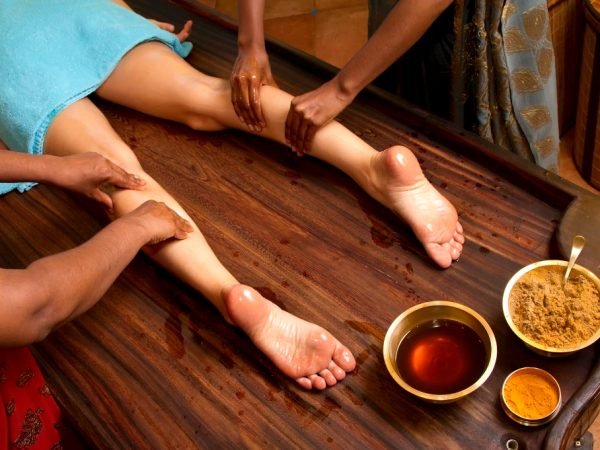
Ayurvedic diabetic foot care focuses on controlling blood sugar, promoting ulcer healing, and preventing infections through cleansing herbs, specialized oils, and metabolic management. Key treatments include wound cleansing with Triphala decoction, dressing with Jatyadi taila or Apamarga Kshara taila for tissue regeneration, and Jalaukavacharana (leech therapy) for microcirculation restoration.
According to I-AIM Healthcare Centre, Ayurveda Hospital in Bangalore, “Diabetic foot management needs a protocol that addresses wound healing, sugar regulation, and peripheral circulation all at the same time.”
Non-healing wound on your foot that hasn’t improved despite weeks of dressings? Book Appointment
What causes diabetic foot ulcers to resist healing and lead to amputation?
Peripheral neuropathy, vascular insufficiency, and chronic hyperglycemia create conditions where minor foot injuries progress to limb-threatening ulcers.
- Diabetic neuropathy: Sensory nerve damage from prolonged hyperglycemia eliminates pain sensation in feet. Pressure sores, blisters, and cuts develop unnoticed. Wounds reach advanced infection before clinical detection
- Peripheral vascular disease: Atherosclerotic narrowing of lower limb arteries reduces oxygen delivery and immune cell transport to wound site. Healing capacity drops below threshold needed for tissue repair
- Hyperglycemia and infection: Elevated blood glucose feeds bacterial proliferation directly. Minor ulcers progress to cellulitis, then osteomyelitis when infection reaches bone. Wagner Grade 3 necrosis outpaces any dressing protocol
- Delayed presentation: Majority of diabetic foot patients in India present at Wagner Grade 2 or 3. Neuropathy masks early symptoms completely. Primary care checkups frequently skip foot examination during routine diabetic reviews
Gangrene spreading and suddenly everyone’s talking amputation. Makes sense when sepsis is on the table. But here’s what gets skipped in that conversation. Wagner Grade 1 and 2 ulcers do respond to treatment. You just have to catch them before the tissue is gone for good. The surgical department looks at each foot individually. No cookie-cutter decisions happening here.
How does Ayurvedic wound care protocol prevent diabetic foot amputation?
Sushruta Samhita’s Shastiupakrama documents 60 wound procedures for converting Dushta Vrana into healable Shuddha Vrana through staged clinical intervention.
- Triphala Prakshalana: Wound irrigation with Triphala kashaya containing Terminalia chebula, Terminalia bellerica, and Emblica officinalis. Provides antibacterial, antifungal, and antimutagenic action preserving fragile granulation tissue
- Jalaukavacharana: Medicinal leeches secrete over 20 bioactive compounds including hirudin, bdellins, and histamine. These deliver anticoagulant, anti-inflammatory, and vasodilation effects restoring microcirculation in ischemic tissue
- Jatyadi taila dressing: Applied during Vrana Ropana phase after wound bed converts from Dushta to Shuddha stage. Jatyadi taila or Apamarga Kshara taila promotes layer-by-layer tissue regeneration from wound base upward
- Internal metabolic correction: Chandraprabha vati regulates glycemic and urinary pathways. Shilajit supports peripheral nerve repair. Vasant Kusumakar Ras prevents diabetic complication progression throughout wound healing duration
NCBI has published case reports. Complete healing of diabetic foot osteomyelitis. Antibiotics had failed for months in those cases. Months. And then the Ayurvedic wound protocol worked where the antibiotics couldn’t. A man from Dakshina Kannada showed up at I-AIM after being told his toe had to go. His local hospital had basically given up. Did the full Shastiupakrama protocol here. Walked out on both feet. Three years now. No recurrence. No infection. That’s not us claiming it. Follow-up X-rays confirmed it. Read how Panchakarma supports metabolic recovery in chronic diabetic conditions.
Why Choose I-AIM Healthcare Centre?
I-AIM Healthcare Centre is NABH-accredited with Shalya Tantra surgeons who specialize in Dushta Vrana management, diabetic wounds, peripheral vascular conditions, and para-surgical Ayurvedic procedures. Hospitals that told patients nothing more can be done have referred cases here. Some of those patients still have their feet.
His toe is still attached. Three years and counting. That result came from Sushruta’s wound classification system running alongside modern imaging and blood work. Not someone’s Instagram Ayurveda page. Not a wellness retreat with cucumber water. Call 7204377000 to book your consultation.
FAQs
Early to mid-stage Dushta Vrana ulcers often heal completely with sustained Ayurvedic wound care.
Most cases require 14 to 30 days depending on Wagner grade and ulcer severity.
Yes, Jalaukavacharana is clinically safe under trained Shalya Tantra supervision.