

How Nasya Therapy for Chronic Sinusitis Works?
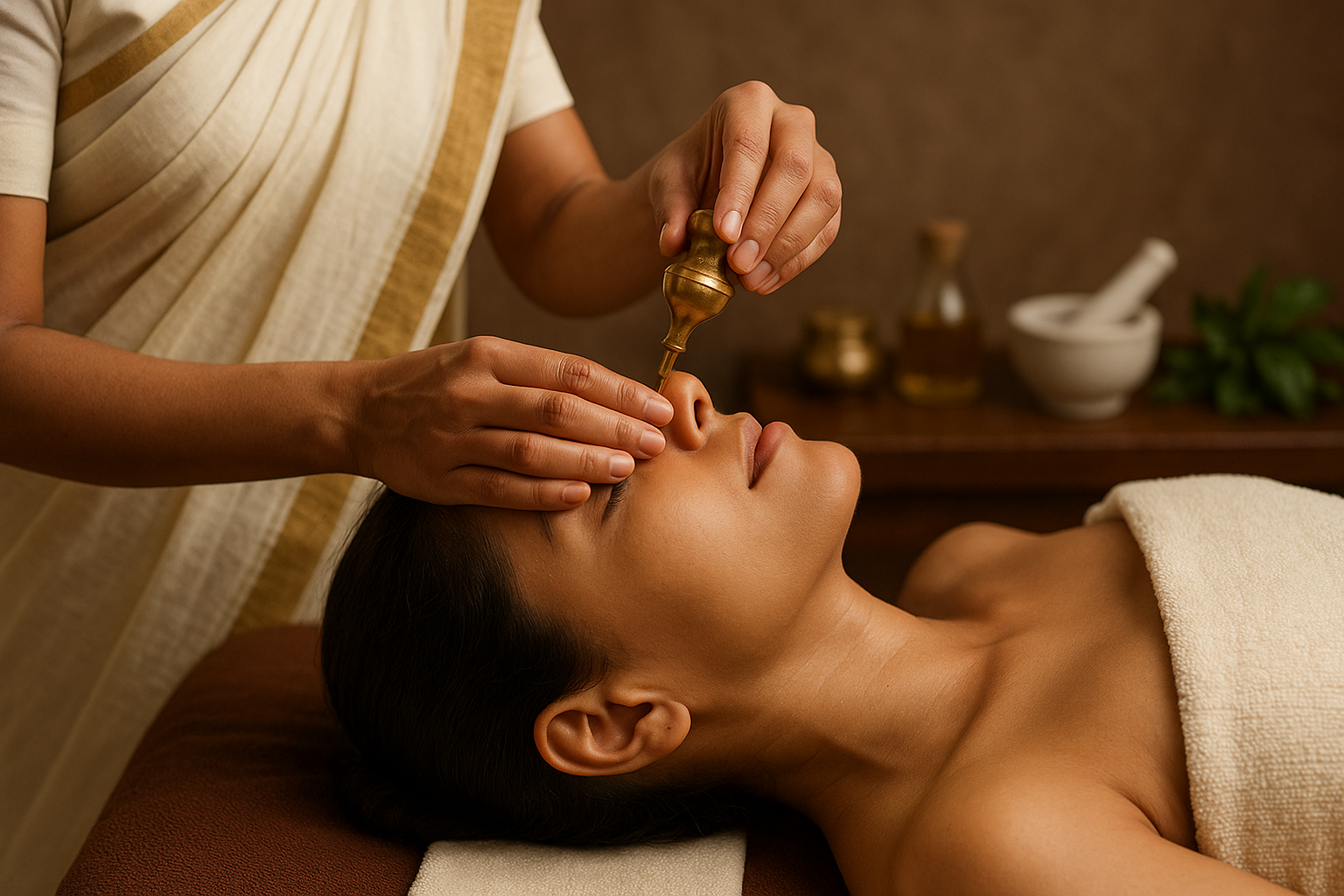
Nasya therapy is a core Ayurvedic detoxification procedure under Panchakarma designed to treat conditions above the collarbone, making it the primary treatment for chronic sinusitis, nasal congestion, and sinus headaches. It involves administering medicated oils, herbal powders, or decoctions directly into the nostrils to lubricate dried passages, liquefy impacted mucus, and soothe inflamed sinus tissues. Ayurveda considers the nose the direct gateway to the head (Nasa hi Shiraso Dwaram), and Nasya exploits this pathway to deliver medicine where oral drugs can’t reach with the same concentration.
According to I-AIM Healthcare Centre, Ayurveda Hospital in Bangalore, “Nasya targets sinus inflammation at the source instead of suppressing symptoms systemically the way antihistamines and steroid sprays do.”
Sinus congestion and headaches that keep returning every few weeks despite medications? Book Appointment
Why does chronic sinusitis keep coming back despite treatment?
Chronic sinusitis affects over 10% of the Indian population and conventional treatment addresses symptoms without correcting underlying mucosal dysfunction.
- Kapha accumulation: Excess Kapha produces thick mucus blocking sinus drainage. Antihistamines dry it temporarily but don’t clear what’s sitting deep in the frontal and maxillary cavities
- Mucosal inflammation cycle: Infection damages lining. Lining swells. Swelling blocks drainage. Blocked drainage breeds more infection. Your ENT keeps treating this loop with antibiotics without breaking it
- Antibiotic resistance: Third or fourth antibiotic course in one year and bacterial resistance kicks in. Same amoxicillin that worked in January barely dents the infection by October
- Allergic triggers ignored: Dust, pollen, mould, cold air. Steroids suppress the allergic response but nobody’s asking why your body overreacts to these triggers. Root cause stays untouched
People cycle through ENT consultations, CT scans, multiple antibiotic courses, sometimes sinus surgery too. Six months later the whole thing starts again. Same blocked nose. Same headaches. Same pharmacy bill. The ENT and ophthalmology department figures out whether your sinusitis is infection-dominant, allergy-dominant, or structural before recommending anything.
What happens during a Nasya therapy session for sinusitis?
The procedure follows three classical phases: Purvakarma, Pradhana Karma, and Paschat Karma designed to systematically clear, medicate, and protect sinus passages.
- Purvakarma: Facial oil massage and localized steam over the sinus region to loosen impacted mucus before medicine goes in. Skip this and the oil just sits on top of the blockage doing nothing
- Pradhana Karma: 4 to 8 drops of warm medicated oil into each nostril while lying face-up. Anu taila for general congestion. Shadbindu taila for chronic Panchakarma detoxification cases. Vacha oil for severely impacted Kapha
- Paschat Karma: Dhoomapana (herbal smoke inhalation) and warm water gargling after the procedure. Clears residual oil and loosened mucus from the throat. Prevents dislodged Kapha from settling back into the same passages
- Course length: 7 to 14 consecutive days. First 2 to 3 days involve heavy mucus discharge. Patients panic thinking it’s worse. It’s not. That’s accumulated Kapha leaving. Breathing clears noticeably by day 5
Here’s what catches people off guard. That post-nasal drip they’d basically accepted as permanent? Reduces dramatically by course end. Sense of smell comes back. Mornings change completely. And unlike steroid sprays the relief doesn’t vanish the second you stop using them. Nasya actually cleared what was sitting inside your sinuses for years instead of just temporarily shrinking the swelling around it. Read how Panchakarma supports respiratory recovery from chronic conditions.
Why Choose I-AIM Healthcare Centre?
I-AIM Healthcare Centre is NABH-accredited with dedicated Panchakarma therapy rooms, qualified physicians who assess your sinus CT and allergy profile before prescribing Nasya, and a respiratory department handling chronic sinusitis alongside asthma and allergic rhinitis under one roof. Not a wellness centre where the therapist decides your treatment based on a 5-minute conversation.
Patients who’d been popping Montair-LC every single night for three years straight came here. Did the full supervised Nasya course. Tapered off the tablets. Their mornings changed completely. No more waking up with a stuffed nose and blindly reaching for the nasal spray on the nightstand before even brushing teeth. That’s what actual sinus detoxification looks like. Not a YouTube neti pot tutorial. Not a steam inhaler from Flipkart. Clinical Nasya done properly by people who studied this for years. Call 7204377000 to book your consultation.
FAQ
How many Nasya sessions are needed for chronic sinusitis?
Most cases need 7 to 14 consecutive daily sessions depending on congestion severity.
Is Nasya therapy painful or uncomfortable?
No, most patients find it soothing after initial unfamiliarity with nasal oil drops.
Can Nasya therapy replace sinus surgery for chronic cases?
Many chronic sinusitis patients improve significantly enough to avoid surgical intervention.
What oils are used in Nasya for sinus treatment?
Anu taila, Shadbindu taila, and Vacha oil are commonly used based on dosha assessment.
References