
Get Directions

 📞 Call Now
 Consult Doctors Online
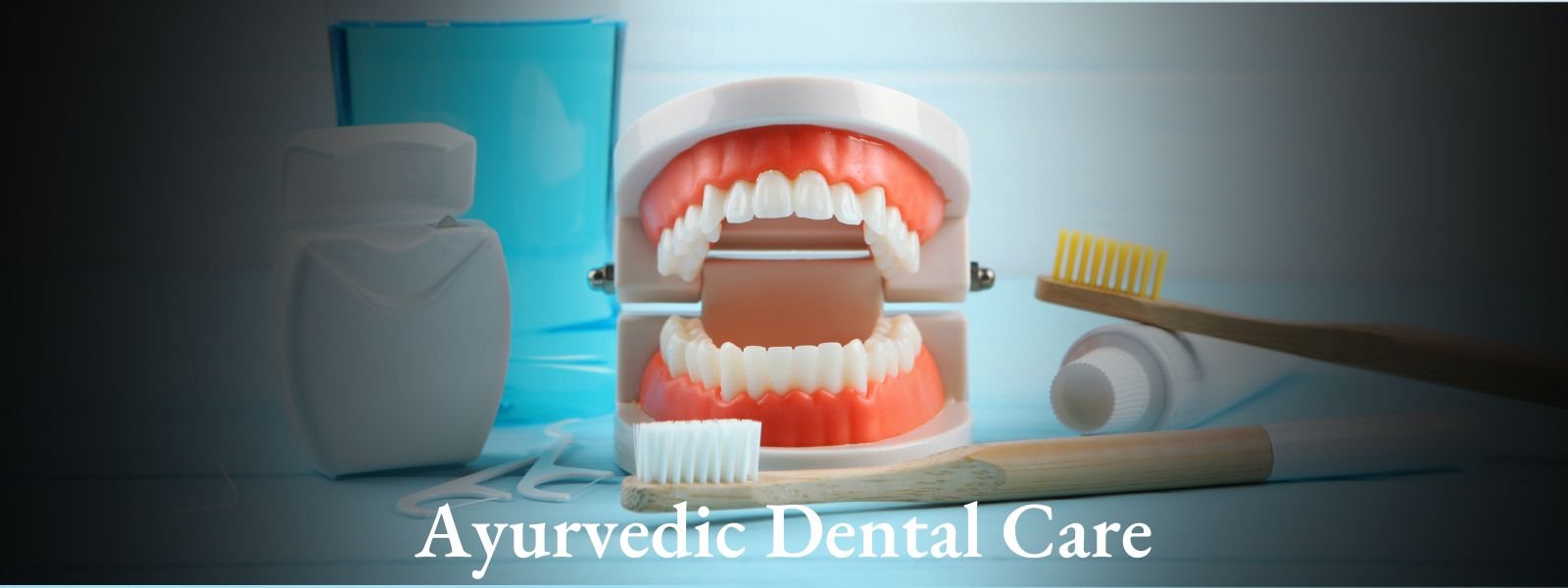

Oral health extends well beyond the teeth themselves. Recurring cavities, bleeding gums, sensitivity, and chronic bad breath often reflect deeper imbalances in digestion, immunity, and lifestyle. Conventional dentistry addresses visible damage with precision, yet the underlying patterns that drive these issues to recur often go untreated.
Ayurveda offers a broader vantage point. It treats the mouth as part of the digestive and constitutional system, managing oral health through preventive routines, internal correction, and targeted classical therapies that complement modern care.
I-AIM Healthcare Center brings this discipline into a modern clinical setting. As a NABH-accredited Ayurveda hospital in Bangalore, the centre operates an integrative dental department where Ayurvedic Vaidyas and dental professionals collaborate on diagnostics, treatment planning, and follow-up. Patients receive the precision of contemporary dentistry alongside the depth of classical oral care.
This combined model defines I-AIM’s Ayurvedic Dentistry in Bangalore, built to protect long-term oral health rather than only repair what is already damaged. Every plan is shaped around the patient’s Prakriti, medical history, and lifestyle, drawing on daily oral routines, dosha-specific therapies, and constitutional correction.
Before the conditions and treatments, the basics. Let’s have a look at what this discipline involves.
Ayurvedic dentistry, classically known as Danta Chikitsa, is the branch of Ayurveda devoted to oral and dental health. It views the mouth as part of the wider digestive and respiratory system, with direct links to dosha balance, immunity, and the gut.
Treatment is structured around three pillars. The first is daily oral hygiene through Dinacharya, including tongue scraping, oil pulling, and herbal tooth powders. The second is targeted therapy for active conditions, such as gum massage, medicated gargles, and herbal applications. The third is internal correction, where diet, classical medicines, and lifestyle changes address the underlying imbalance fuelling recurring dental issues.
The scope reaches well past cavities and bad breath. Here are the conditions Ayurveda treats most often.
Ayurveda offers solutions for a wide range of dental and oral concerns:
Bleeding and inflamed gums (Sheetada)
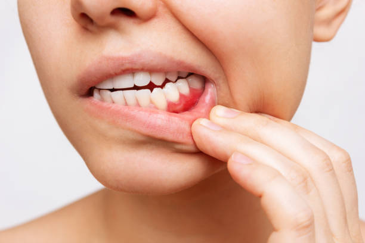
Tooth sensitivity (Dantaharsha)
Bad breath and oral odour (Mukhadaurgandhya)
Recurring mouth ulcers and aphthous sores
Tartar and plaque buildup (Dantakapalika)
Tongue coating and oral candidiasis
Jaw stiffness and TMJ discomfort
Receding gums and early periodontal disease
Early-stage cavities and toothache (Krimidanta)
Dry mouth and reduced saliva flow
Discoloured or stained teeth
Post-extraction healing and recovery support
Holding off on a dental issue because nothing has worked long-term? Get a complete oral assessment and a plan that treats the actual cause.
Curious what really causes dental issues? Here are the underlying causes Ayurveda points to.
Most dental problems trace back to internal patterns long before they appear in the mouth:
Aggravated doshas: Excess Vata dries oral tissues and causes sensitivity, Pitta drives inflammation and ulcers, and Kapha contributes to tartar and excess mucus.
Weak digestive Agni: Poor digestion generates Ama, the metabolic toxin that quietly damages gum and dental tissue.
Diet patterns:Excess sweet, sour, sticky, cold, or processed foods disturb oral balance.
Inconsistent hygiene routines: Skipping tongue scraping, oil pulling, or thorough cleaning.
Stress and irregular sleep: Lower immunity and accelerated gum disease.
Mouth breathing: Reduces saliva flow, increasing decay and dryness.
Tobacco, alcohol, and pan masala: Damage gum tissue, enamel, and oral microbiota.
Age and genetics: Natural wear and inherited susceptibility add risk over time.
Each treatment has a defined purpose and method. Here is how Ayurveda approaches oral care in practice.
At I-AIM’s Department of Ayurveda in Dentistry in Bangalore, our seasoned experts combine classical Danta Chikitsa with modern dental care for layered, lasting results:
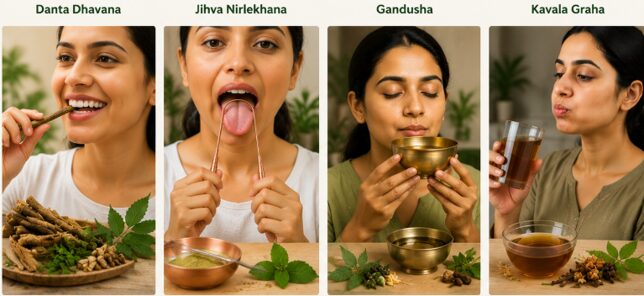
Danta Dhavana: Cleaning teeth with twigs of neem, khadira, or babool, which strengthen gums while cleansing naturally.
Jihva Nirlekhana: Daily tongue scraping using a copper or steel scraper to remove Ama and freshen breath.
Gandusha: Holding medicated oil or herbal decoctions in the mouth to strengthen gums, teeth, and jaw muscles.
Kavala Graha: Therapeutic gargling and swishing with medicated liquids, useful in ulcers, infection, and inflammation.
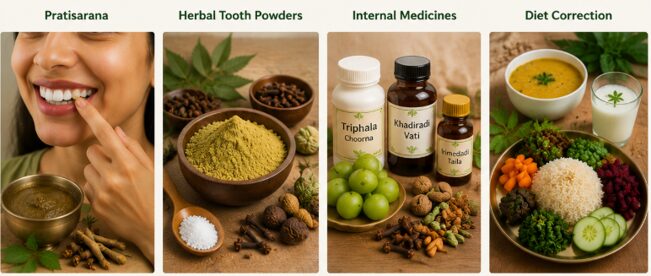
Pratisarana:Gum massage with herbal pastes prepared from Triphala, Yashtimadhu, or Khadira.
Internal medicines: Classical formulations such as Triphala Choorna, Khadiradi Vati, and Irimedadi Taila tailored to each case.
Herbal tooth powders:Daily-use blends of neem, clove, Triphala, and rock salt.
Diet correction: Targeted nutrition that reinforces oral and digestive balance.
The gains run deeper than a brighter smile. A closer look at what consistent Ayurvedic dental care delivers.
Regular Ayurvedic dental care produces results that build steadily over time:

Stronger gums and healthier jaw muscles
Lower tooth sensitivity and reduced decay risk
Less inflammation and gum bleeding
Fresher breath without harsh chemical mouthwashes
Slower gum recession over time
Improved digestion through better oral hygiene
Reduced exposure to abrasive commercial products
Strengthened immunity in the oral cavity
Cost-effective long-term maintenance
Gentle enough for sensitive patients, children, and the elderly
Not a question of better or worse, but of when and why. Here is how the two approaches differ.
Both systems have real strengths. Understanding the difference helps patients choose well:
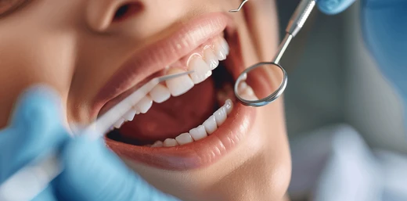
1. Approach: Modern dentistry intervenes when visible damage exists. Ayurveda prioritises prevention and root-cause correction.
2. Tools: Modern dentistry uses surgical and mechanical procedures. Ayurveda relies on oils, herbs, and daily routines.
3. Focus: Modern dentistry treats the tooth and gum directly. Ayurveda treats oral health as part of the whole body.
4. Speed of results: Modern dentistry delivers quick repair. Ayurveda focuses on durable, internal restoration.
5. Maintenance: Modern dentistry needs periodic cleanings and check-ups. Ayurveda relies on consistent daily lifestyle practices.
6. Best used together: At I-AIM, both systems work in coordination, so patients benefit from precise dental procedures and deep internal support.
Looking for dental care that prevents as much as it fixes? Speak with an expert and find the right balance for your oral health.
The benefits reach across age groups and conditions. Here is who tends to gain the most.
Ayurvedic dental care in Bangalore at I-AIM is shaped to suit a wide range of patients:
Adults with recurring gum issues or sensitivity
People prone to cavities despite regular brushing
Those struggling with persistent bad breath
Diabetics facing elevated periodontal risk
Senior citizens experiencing dry mouth or gum recession
Children building healthy oral hygiene habits
Pregnant women managing oral health safely
Patients recovering from extractions or oral surgery
Anyone seeking to reduce chemical exposure in daily oral care
Health-focused patients wanting long-term preventive routines
Choosing the right place matters as much as choosing the right treatment. Here is what sets I-AIM apart.
Combined dental approach: Ayurvedic Vaidyas and modern dentists treat each patient together. Diagnoses and plans are shared, not handed off.
Root-cause focus: Treatment looks beyond the visible damage to address dosha balance, digestion, and lifestyle. Recurring problems get tackled at the source.
Authentic on-site pharmacy: Tooth powders, oils, and classical formulations are prepared in-house. Patients receive products of consistent quality and proven origin.
Whole-body coordination: Dental issues linked to diabetes, immunity, or digestion are managed alongside the underlying condition. Oral care does not happen in isolation.
Prevention-first mindset: Daily oral routines and lifestyle guidance run alongside active treatment. Patients leave with tools to maintain results, not return for repeat fixes.
Calm clinical environment: A peaceful North Bengaluru campus that reduces dental anxiety and supports recovery. The setting itself eases the experience.
Early-stage cavities and the inflammation around them respond well to Ayurvedic care. Advanced cavities still need conventional fillings, often supported by Ayurvedic recovery therapies.
Yes. Gandusha and Kavala Graha, the classical forms of oil pulling, have measurable benefits for gum health, plaque reduction, and breath freshness.
Sesame oil is the classical first choice. Coconut oil and medicated Irimedadi Taila also work well, depending on the constitution.
Yes, when prepared from authentic ingredients. I-AIM’s in-house formulations are designed for daily use without enamel damage.
Yes, and particularly recommended given the elevated periodontal risk in diabetes.
Disclaimer: The information shared in this content is for educational purposes and not for promotional use.
“For one who desires longevity the teachings of Ayurveda, serve as the foundation and as a means for achieving the harmonious balance of health, wealth, and happiness by dharma.”
74/2, Jarakabande kaval, Yelahanka, Via Attur post, Bengaluru - 560064
Mon-Fri: 9am-5pm, Sat: 10am-4pm,
Sun: 10am-2pm
Home
About Us
Services
Facilities
Contact Us
2026 I-AIM Healthcare Centre. All rights Reserved | Read the I-AIM Healthcare Centre Payment Terms & Conditions, Privacy Policy, Refund & Cancellation Policy.
 Optimized by Seraphinite Accelerator