


Ayurvedic Cancer Supportive Care — How Rasayana Therapy Helps During Chemotherapy?
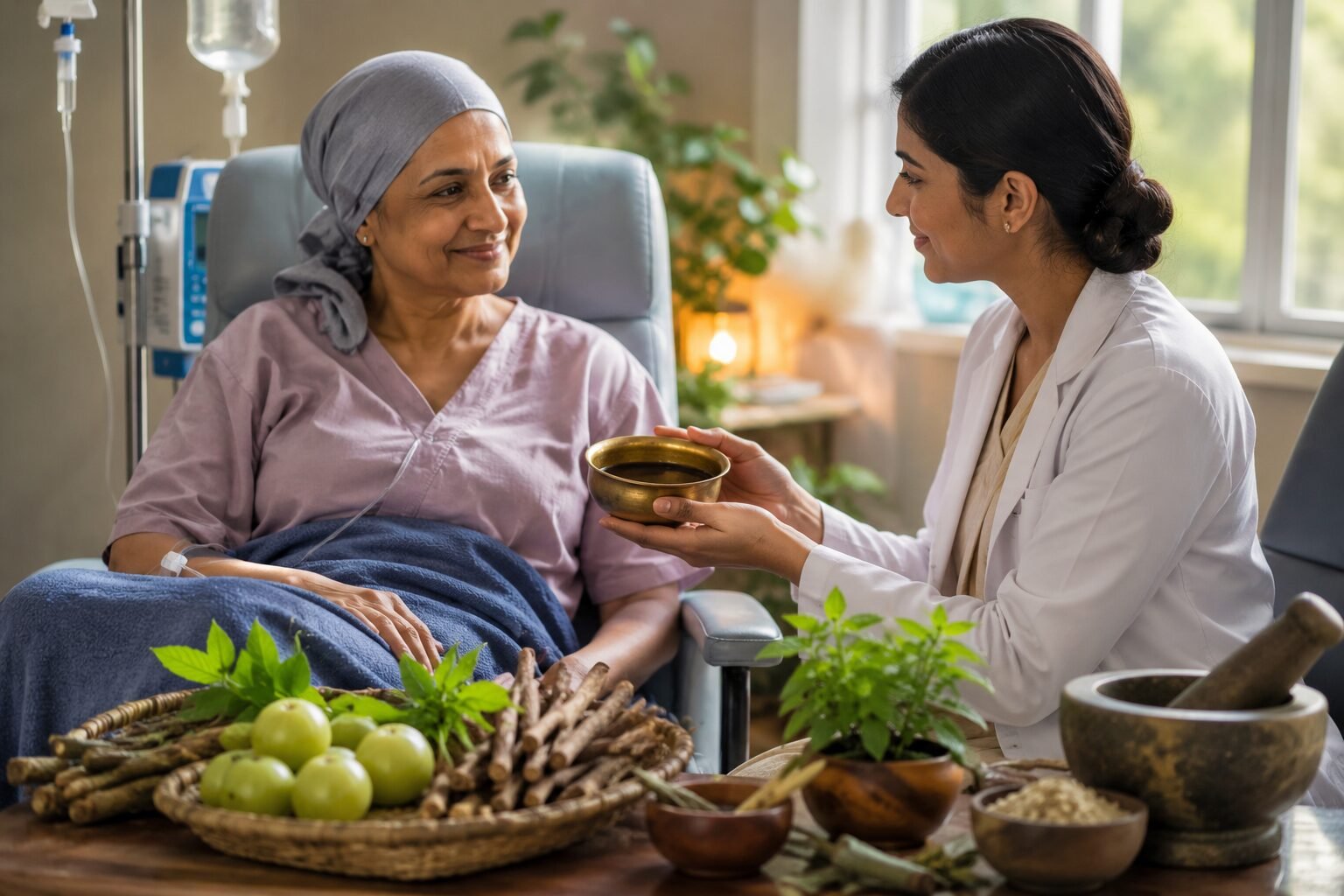
Chemotherapy cannot distinguish cancer cells from bone marrow, gut lining, and hair follicles. The fatigue, collapsing blood counts, and nausea that follow are predictable systemic damage. When neutrophil counts drop below threshold, the oncologist delays the next cycle or cuts the dose. Dose reductions compromise efficacy. Delays give the tumour time to recover. Rasayana therapy runs alongside chemotherapy to protect healthy tissue and keep the patient strong enough to finish treatment on schedule.
According to I-AIM Healthcare Centre, Ayurveda Hospital in Bangalore, “Rasayana does not interfere with chemotherapy. It supports the body receiving it. Patients who complete cycles without dose reductions have better outcomes. That is what Rasayana protects.”
Struggling through cycles with worsening fatigue and falling counts? Book Appointment
Why do side effects become the limiting factor in cancer treatment?
Oncologists dose based on what the body tolerates, not just what the cancer needs.
- Bone marrow suppression drops neutrophils after every cycle. When they fall too low the next round gets delayed or reduced. Dose reductions compromise efficacy. Delays give the tumour time to recover
- Gut mucosal damage causes nausea and diarrhoea that collapse nutritional status fast. Malnourished patients tolerate subsequent cycles worse
- Fatigue builds across rounds into something that makes patients refuse further treatment entirely. The cancer is still there. The body gave up before the protocol finished
- Conventional oncology manages this with anti-emetics and growth factors. Neither touches the underlying Dhatu Kshaya — the tissue depletion Ayurveda identifies as the real limiting factor
Oncology support at I-AIM times Rasayana formulations around each cycle to protect and rebuild simultaneously.
What does Rasayana actually do during a chemotherapy course?
Rasayana means that which enters the channels and renews them.
- Ashwagandha reduces chemotherapy-induced fatigue and improves haemoglobin without interfering with cytotoxic drugs
- Guduchi raises neutrophil counts between cycles and cuts febrile neutropenia episodes that cause treatment delays
- Shatavari protects gut mucosa and supports intestinal recovery so nutritional absorption holds through treatment
- Chyawanprash daily rebuilds Ojas — the Ayurvedic equivalent of immune reserve. Each has a mechanism and a monitored response, not just a traditional claim
Read about Ayurvedic kidney stone management to see the same integrative logic applied to a different condition.
Why Choose I-AIM Healthcare Centre
I-AIM is NABH-accredited with a dedicated oncology support programme since founding. Every Rasayana prescription is reviewed against the patient’s chemotherapy protocol, blood counts, and organ function before being finalised. A breast cancer patient on AC-T came in after cycle two with neutrophils at 800 and her oncologist recommending a dose reduction. Guduchi, Ashwagandha, and Shatavari through cycles three and four kept counts above 1500. Dose reduction avoided. All eight cycles completed on schedule.
Read more about I-AIM Healthcare Centre. Call 7204377000 to book your consultation.
Frequently Asked Questions
Does Rasayana interfere with chemotherapy?
No. Ashwagandha, Guduchi, and Shatavari do not interfere with cytotoxic drug mechanisms. The physician reviews each patient’s specific regimen before prescribing.
When should it start?
Ideally before the first cycle. Patients can begin at any point. Formulations are adjusted based on cycle timing and current blood counts.
Does it help with radiation side effects too?
Yes. Shatavari and Guduchi protect mucosa relevant to radiation-induced mucositis. Ashwagandha has radioprotective properties in preclinical studies.
Is it suitable for all cancer types?
Yes. Formulations are chosen based on the chemotherapy regimen, affected organ system, and functional status — not the diagnosis alone.
References
-
- Rasayana therapy in oncology — NCBI / PubMed
- WHO Traditional Medicine Strategy — World Health Organization
