

Vamana Therapy for Asthma — How Kapha Detox Opens Airways?
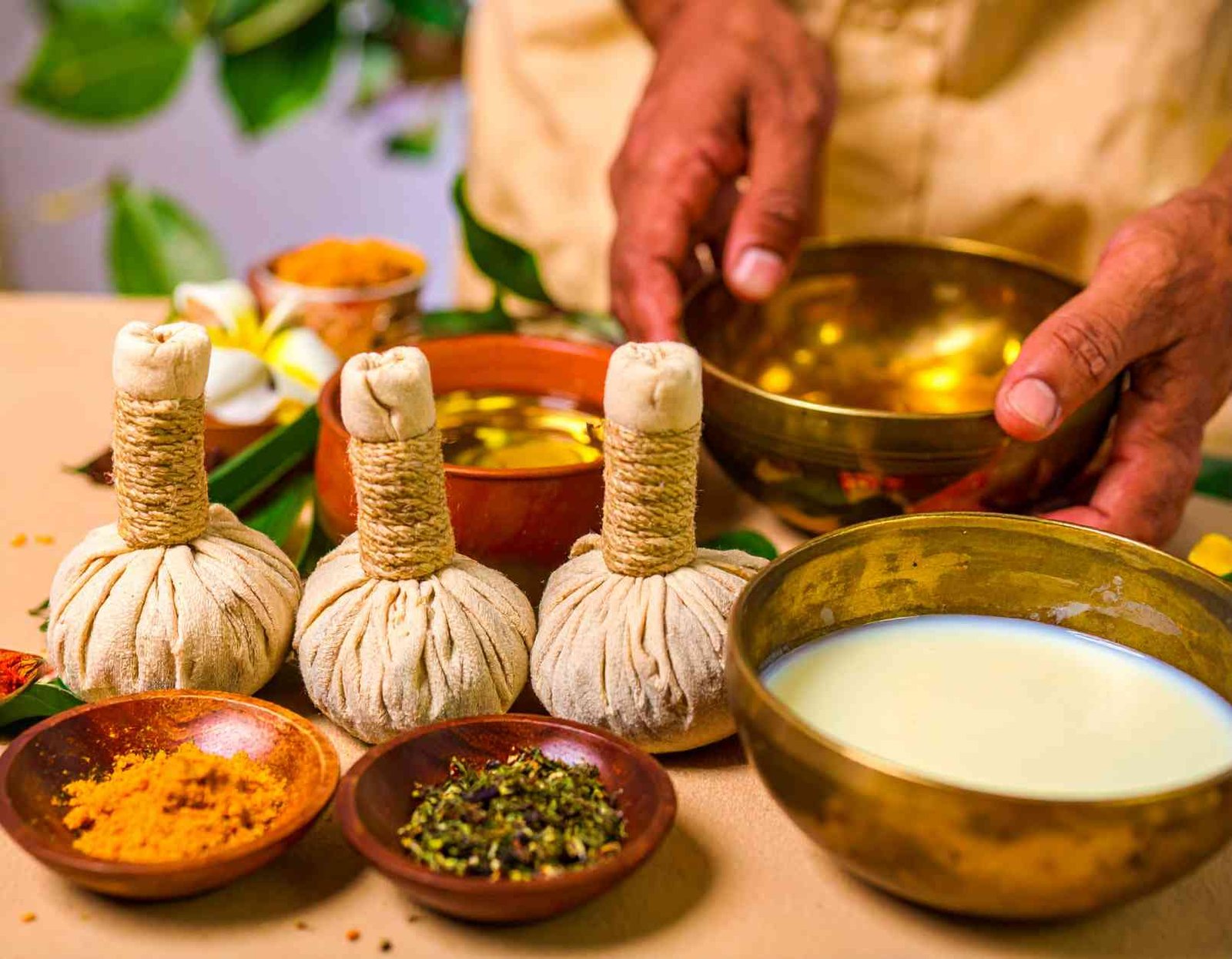
Vamana therapy is a specialized Ayurvedic detox procedure under Panchakarma designed to manage chronic asthma by eliminating accumulated Kapha from the chest and upper gastrointestinal tract. Through controlled therapeutic vomiting, supervised by a qualified physician, it targets the root cause of airway congestion. It expels Kapha-dominant toxins. It does not just suppress symptoms with bronchodilators or steroids. The full protocol includes 3 to 7 days of internal oleation (Snehapana), followed by Swedana, one supervised emesis session, and Samsarjana Krama recovery diet lasting 3 to 7 days.
According to I-AIM Healthcare Centre, Ayurveda Hospital in Bangalore, “Vamana clears the respiratory channels from inside out, which is why asthma patients who complete the protocol often reduce their inhaler dependence significantly.”
Asthma attacks getting more frequent despite regular inhaler use and steroid courses? Book Appointment
Why does chronic asthma resist long-term control with conventional treatment?
Conventional asthma management suppresses airway inflammation and bronchospasm pharmacologically but does not address the underlying Kapha accumulation driving recurrent mucus production and bronchial hypersensitivity.
- Kapha clogs airways: Thick mucus lines the bronchial tubes. Inhalers open them temporarily. Mucus stays. Next trigger hits and the tubes clamp shut again because the underlying congestion was never actually removed
- Steroid dependency builds: Budesonide, Fluticasone, Montelukast. Patients start on low doses. Dosage climbs year after year. Try reducing and the wheezing comes back worse than before. Body forgot how to manage inflammation without the drug
- Digestive fire weakens: Ayurveda links asthma directly to weakened Agni (digestive fire). Poor digestion produces Ama (metabolic toxins) that migrate upward into the respiratory tract and become Kapha. Treating lungs while ignoring the stomach is treating the smoke and not the fire
- Seasonal triggers repeat: Monsoon arrives. Cold weather starts. Kapha naturally peaks in the body during these seasons. Patients who were stable all summer suddenly can’t breathe in October. Same cycle every single year because the seasonal Kapha surge was never preemptively cleared
Most asthmatics in India have been on Deriphyllin or Asthalin since childhood. Some since their teens. Decades of rescue inhalers and nobody addressed why the mucus keeps forming. The respiratory department evaluates your lung function, allergy profile, and Kapha status together before deciding if Vamana is appropriate for your specific case.
How does the Vamana procedure actually work for asthma?
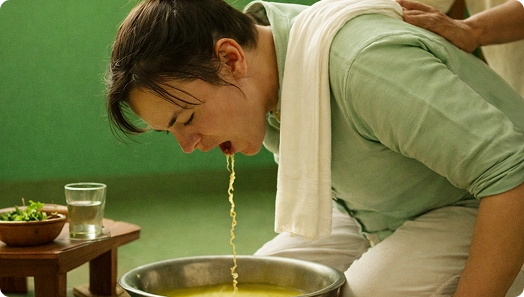
Vamana follows a precise three-phase protocol: Purvakarma (preparation), Pradhana Karma (therapeutic emesis), and Paschat Karma (recovery) designed to mobilize, expel, and prevent recurrence of Kapha accumulation in the chest.
- Snehapana preparation: Medicated ghee in increasing doses over 3 to 7 days. Ghee enters tissues and loosens deep-seated Kapha from bronchial walls and stomach lining. Your appetite drops completely by the last day. That’s the sign oleation is done
- Swedana and emesis day: Full body steam therapy morning of the procedure. Then milk-wheat porridge to fill the stomach. Licorice decoction and specific emetic herbs administered. Controlled vomiting begins under physician supervision. Entire session takes 1 to 2 hours. Doctor monitors each bout for volume, colour, and consistency
- What comes out: Thick yellowish-white mucus. Sometimes in quantities that shock the patient. That’s the Kapha that was sitting in your bronchial tree and stomach for months. Inhalers were just pushing air past it. Vamana pulls it out entirely through the body’s natural upward Panchakarma purification route
- Samsarjana recovery: Graded diet over 3 to 7 days starting from thin rice water. Digestive fire needs rebuilding after the purge. Jumping back to regular food ruins the entire effort. Most patients feel genuinely lighter in the chest by day 2 of recovery. That feeling of breathing fully without tightness. Some hadn’t felt that in years
Here’s the thing people don’t expect. The first monsoon season after completing Vamana, many patients go through it without a single asthma attack. First time in maybe a decade. Because the Kapha that usually accumulated and triggered the seasonal episode wasn’t there anymore. It was already cleared out months earlier. That’s preventive medicine in the truest sense. Read how Panchakarma supports respiratory recovery from chronic conditions.
Why Choose I-AIM Healthcare Centre?
I-AIM Healthcare Centre is NABH-accredited with a dedicated respiratory department, experienced Panchakarma physicians who’ve supervised hundreds of Vamana procedures, and an integrated setup where pulmonary function testing runs alongside Ayurvedic assessment. Vamana isn’t something you do at a wellness resort with a therapist reading instructions off a laminated card.
Patients who’d been carrying inhalers in every pocket, every bag, every car glovebox for fifteen years came here. Did the full Vamana protocol. By the second month their inhaler usage dropped to once a week. Some stopped entirely. Their pulmonologist couldn’t explain it but their spirometry numbers showed it. That’s what happens when you actually remove the mucus instead of just relaxing the muscles around it. Call 7204377000 to book your consultation.
FAQ
How many days does the full Vamana protocol take for asthma?
The complete cycle takes 10 to 15 days including preparation, emesis, and recovery diet.
Is Vamana therapy safe for severe asthma patients?
Yes, when performed under qualified physician supervision with proper pre-procedure assessment.
Can Vamana reduce inhaler dependency in chronic asthma?
Many patients significantly reduce or eliminate inhaler use after completing supervised Vamana courses.
When is the best time to undergo Vamana for asthma?
Late winter or early spring when Kapha naturally peaks, ideally before monsoon season triggers begin.