

Ayurveda for Childhood ADHD: A Gentle Approach

Getting an ADHD diagnosis for your child often comes with a familiar next step, a prescription and a behavior plan. Both can genuinely help. But a lot of parents are also looking for something that works on the underlying restlessness itself, not just the visible behavior. Ayurveda frames ADHD-like symptoms under Vataja Unmada, a Vata-dominant disturbance of the mind, and treats it by working directly with the child’s nervous system rather than only managing what shows up in the classroom.
According to I-AIM Healthcare Centre, Ayurveda Hospital in Bangalore, “Stimulant medication can improve focus in the short term, but it doesn’t address the underlying Vata imbalance driving the restlessness and impulsivity. Ayurveda works on grounding that imbalance directly through herbs and therapy, that is the difference between managing attention and actually settling a child’s nervous system.”
Why Behavioral Therapy Alone Sometimes Falls Short
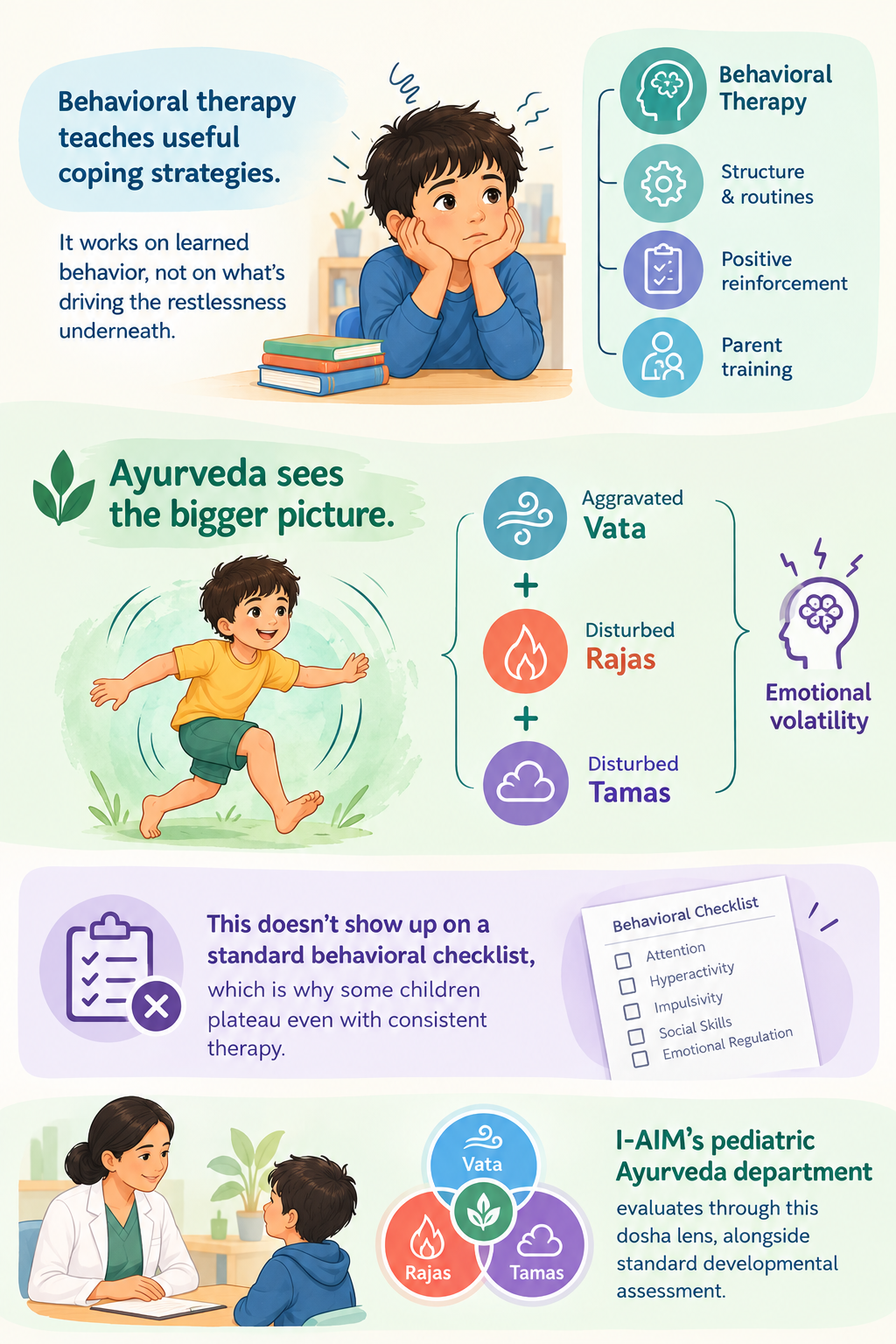
Behavioral therapy teaches coping strategies, but it doesn’t touch what’s driving the restlessness underneath.
- Aggravated Vata drives the core symptoms. Scattered attention, constant movement, and trouble settling at night.
- Disturbed Rajas and Tamas add the emotional swings. Mood outbursts that a standard behavioral checklist misses entirely.
I-AIM’s pediatric Ayurveda department evaluates children through this dosha lens alongside standard developmental assessment.
How This Gentle Approach Actually Works

Medhya Rasayana herbs and Shirodhara form the core of most protocols, backed by a predictable daily routine at home.
- Medhya Rasayana herbs support the mind directly. Brahmi, Shankhapushpi, and Jatamansi are chosen based on the child’s specific pattern, with Brahmi having the most pediatric research behind it.
- Shirodhara settles an overactive Vata state. Adapted more gently for children, it’s commonly used before sleep, alongside warm regular meals and a consistent routine to keep Vata from building back up.
A 2026 review in the Journal of Ayurveda and Integrated Medical Sciences pooled seventeen studies on ADHD management and found meaningful gains in attention and behavior with minimal side effects, though most evidence still comes from smaller studies rather than large trials. This is best used alongside your child’s pediatrician, not instead of one. For more on how Ayurveda calms the nervous system in adults, see our earlier post on Ayurveda for anxiety and stress.
Why Choose I-AIM Healthcare Centre
I-AIM is a NABH-accredited hospital in North Bengaluru with a dedicated Bala Panchakarma division for pediatric Ayurveda, so children are treated with age-appropriate versions of these therapies rather than adult protocols scaled down. Herb dosing and Shirodhara duration are adjusted specifically for the child’s age and constitution, and progress is tracked over repeat visits rather than assessed after a single session. Parents are also involved directly in the diet and routine plan, since consistency at home is what tends to make the biggest difference long term. Call 7204377000 to book a consultation.
FAQs
Can this replace my child’s ADHD medication?
No, it’s meant to work alongside your pediatrician’s care, not instead of it. Please don’t stop or change medication without medical guidance.
At what age can a child start this kind of treatment?
Most pediatric Ayurvedic protocols are adapted from early childhood onward, with therapy intensity and herb dosing scaled to the child’s age.
Is Shirodhara safe for children?
Yes, when done by a trained pediatric Ayurveda practitioner using gentler duration and oil selection suited to children.
How long before we see a change in behavior?
Some parents notice calmer sleep within a few weeks, but meaningful attention and behavior changes typically take a few months of consistent treatment.
References
Desclaimer:
This article is for informational purposes only and does not constitute medical advice. Ulcerative colitis is a serious condition. Please consult a qualified Ayurvedic physician and continue your gastroenterologist’s care before making any treatment changes.