

How Nasya Treats Chronic Migraine in Ayurveda?
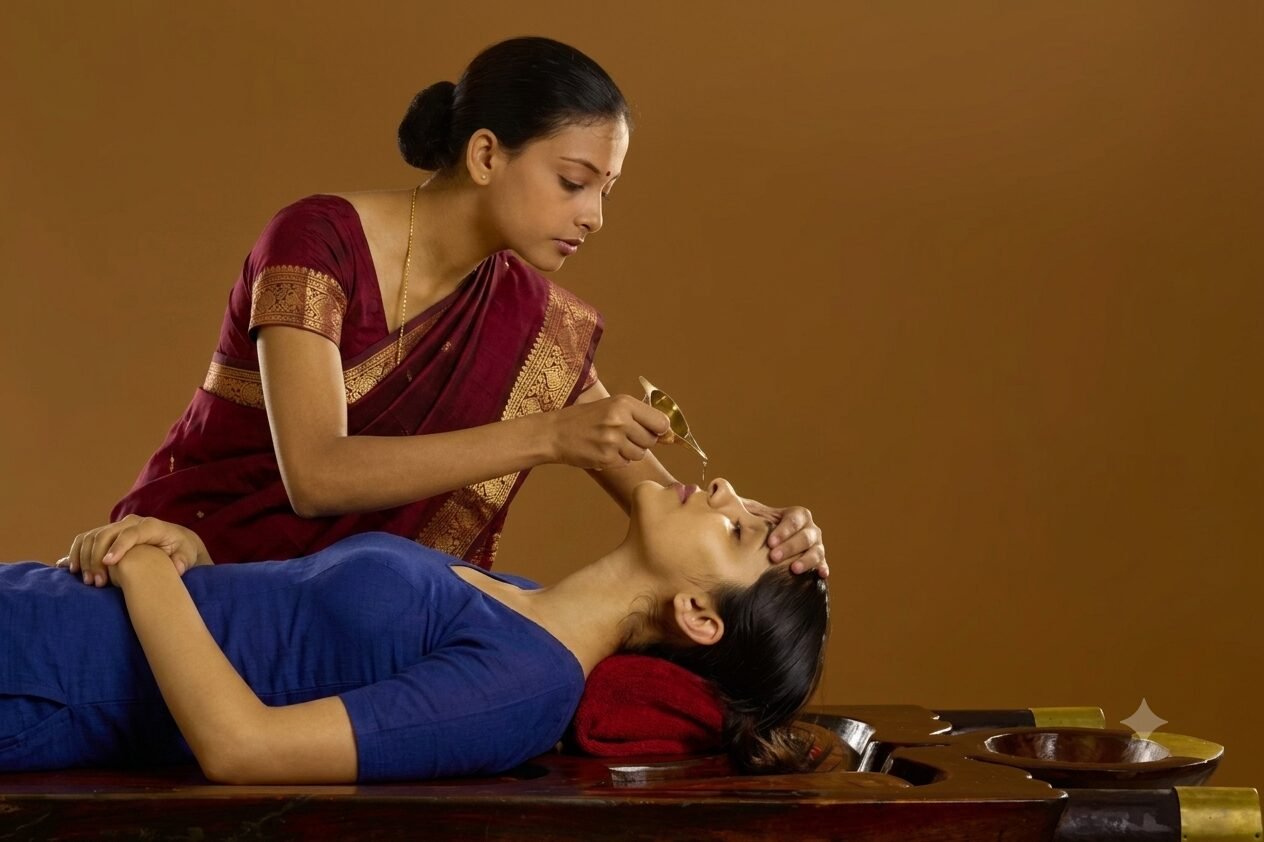
In Ayurveda, chronic migraine is Ardhavabhedaka, a Vata-Pitta disorder where blocked head channels produce recurring, one-sided, throbbing pain with photophobia and nausea. Nasya treats it by delivering medicated oils directly through the nasal passages, which Ayurveda identifies as the direct gateway to the brain “Nasa hi Shiraso Dwaram”. The nose is not just an entry point for air. It is the most direct route for medicine to reach the Shira Srotas, the cranial channels where the obstruction sits. Triptans abort the attack. Nasya clears what is causing it.
According to I-AIM Healthcare Centre, Ayurveda Hospital in Bangalore, “Migraine patients who complete a proper Nasya course stop facing triggers. The head channels are clear. The threshold for an attack rises significantly. That is what root-cause treatment delivers.”
Migraines increasing in frequency despite triptans and preventives? Book Appointment
Why does chronic migraine keep returning with conventional treatment?
Modern migraine management works on the attack. Not on what produces it.
- Triptans abort, not correct: They constrict cranial blood vessels to stop the episode but never fix the Vata-Pitta vitiation causing dilation. Miss one dose and the next attack hits harder
- Preventives blunt everything: Topiramate, Propranolol, Amitriptyline reduce frequency by suppressing neurological sensitivity globally. Side effects accumulate. The migraine returns the moment medication stops
- Trigger avoidance shrinksquality of life: The hypersensitive channel stays intact. Patients avoid chocolate, screens, and late nights indefinitely while the underlying obstruction remains untouched
- Pitta is never cleared: The heat, inflammation, and photophobia component is never directly addressed. Cooling and clearing head channels through Nasya is not part of any conventional migraine protocol
Nasya treatment at I-AIM begins with Nadi Pariksha and headache pattern assessment to determine whether the presentation is Vata-dominant, Pitta-dominant, or combined because oil and decoction selection differs for each type.
How does Nasya actually work for chronic migraine?
Nasya is not a single oil drop into the nose. It follows a structured sequence and the order matters.
- Poorvakarma preparation: Facial Abhyanga with warm medicated oil followed by Nadi Sweda steam opens the nasal channels and relaxes the cranial musculature. This is not optional skipping preparation reduces oil penetration depth significantly
- Nasya administration: Anu Taila or Shadbindu Taila warmed and instilled into both nostrils while the patient lies supine with the head tilted back. Oil travels through nasal mucosa into cranial channels, lubricates dried Vata pathways, reduces hypersensitivity, and clears accumulated Pitta-Kapha obstruction
- Shirovirechana for Pitta-dominant cases: Where intense heat, throbbing, and photophobia dominate, stronger herbal powders replace oil to induce controlled purificatory sneezing. This physically expels accumulated Pitta from the Shira Srotas something medicated oil alone cannot achieve in severe Pitta presentations
- Internal medicines throughout: Pathyadi Kwatha, Shirashooladi Vajra Rasa, and Brahmi Ghrita run parallel to the Nasya course for systemic Vata-Pitta correction and nervous system stabilisation
Read about Greeva Basti for cervical spondylosis cervical involvement is a common co-existing trigger in chronic migraine that the same integrative protocol addresses alongside Nasya.
Why Choose I-AIM Healthcare Centre
I-AIM is NABH-accredited with a dedicated Panchakarma department and over 14 years of integrative Ayurvedic practice in Bangalore. Migraine cases here are assessed with Nadi Pariksha, headache diary review, and cervical examination before the Nasya protocol is designed. A patient averaging 18 migraine days per month on Topiramate and Sumatriptan for four years completed a 14-day inpatient Nasya and Shirovirechana course. At the 8-week follow-up, migraine days dropped to 4 per month. Topiramate dose was halved at 3 months under the neurologist’s supervision. That is the difference between aborting attacks and clearing the channel producing them.
Read more about I-AIM Healthcare Centre. Call 7204377000 to book your consultation.
Frequently Asked Questions
How many Nasya sessions are needed for chronic migraine?
A standard course runs 7 to 14 consecutive daily sessions. Vata-type migraines typically respond within 7 sessions. Pitta-dominant presentations with Shirovirechana usually need the full 14-day course.
Is Shirovirechana the same as Nasya?
No. Nasya covers all nasal administration oils, decoctions, or powders. Shirovirechana is a specific purificatory Nasya using stronger herbal powders to expel Pitta and Kapha from the head. It is reserved for migraines with significant heat, throbbing, and photophobia.
Can it be done alongside existing preventive medication?
Yes. Nasya and Ayurvedic internal medicines do not interact with Topiramate, Propranolol, or Amitriptyline. Dose adjustments of conventional preventives happen only in coordination with the treating neurologist as frequency reduces.
How soon does migraine frequency reduce after Nasya?
Most patients notice reduced attack frequency within 2 to 3 weeks of completing the course. Full benefit consolidates over 6 to 8 weeks post-treatment as the head channels stabilise.
Disclaimer
This article is for informational purposes only and does not constitute medical advice. Please consult a qualified Ayurvedic physician before beginning any treatment.