

How Panchakarma Helps Stroke Recovery?
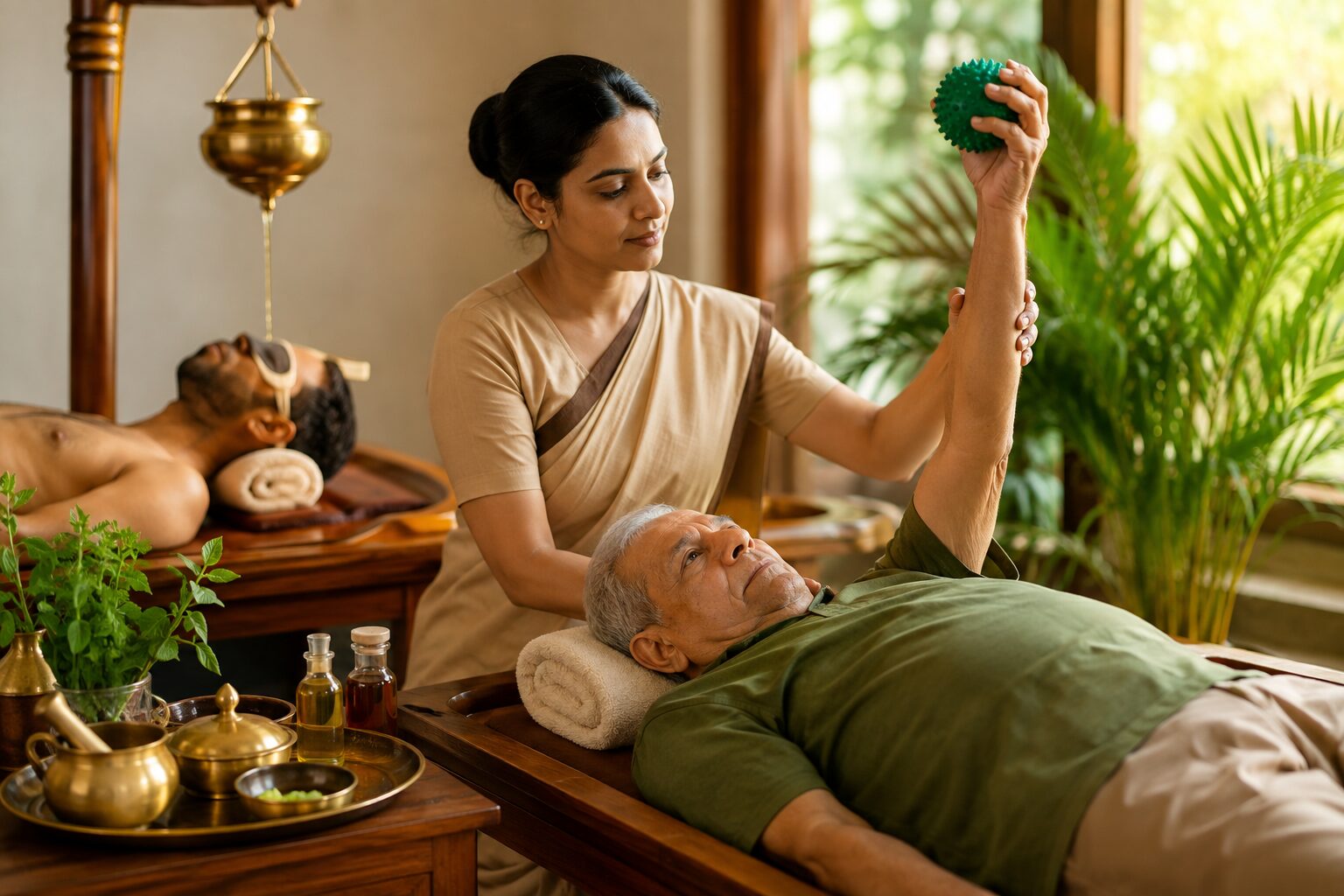
Stroke recovery often stalls once physiotherapy alone stops showing new gains, and families start looking for something that works alongside it rather than instead of it. In Ayurveda, stroke is understood as Pakshaghata, a Vata disorder where the aggravated dosha settles into one side of the body and blocks proper movement and sensation. Panchakarma is built to work on that blockage directly.
According to I-AIM Healthcare Centre, Ayurveda Hospital in Bangalore, “Physiotherapy retrains the muscles that still respond, but it doesn’t calm the aggravated Vata sitting underneath the paralysis. Panchakarma works on that Vata directly, that is the difference between rebuilding movement patterns and actually restoring the tissue’s ability to move.”
Recovery has plateaued despite regular physiotherapy? Book Appointment
Why Physiotherapy Alone Often Plateaus?
Physiotherapy is essential after a stroke, but most patients hit a point where progress slows even with regular sessions. That’s usually because the underlying imbalance driving the paralysis is still untouched.
- Neural retraining has limits. Physiotherapy retrains existing neural pathways, but doesn’t address the Vata imbalance Ayurveda holds responsible for the paralysis itself.
- Stiff muscles need more than movement. Contracted tissue needs deep nourishment, not just repeated drills, to actually loosen and respond.
- Circulation affects everything else. Poor blood flow to the affected limbs slows how well nerve tissue can respond to any therapy, physio included.
- I-AIM treats it alongside physio, not instead of it. The neuromusculoskeletal department combines Ayurvedic assessment with a patient’s ongoing physiotherapy plan.
How Panchakarma Works on Stroke Recovery
The Panchakarma protocol for Pakshaghata isn’t one single treatment. It’s a sequence of therapies, each targeting a different layer of the paralysis, from circulation to the nervous tissue itself.
- Abhyanga nourishes and improves circulation. Full-body medicated oil massage softens stiff tissue and increases blood flow to the affected side.
- Swedana opens what Abhyanga has loosened. Gentle steam therapy follows the massage to release tightness in the channels.
- Basti works on Vata at its root. Medicated enemas calm Vata in the colon, its primary seat in Ayurveda, addressing the imbalance behind the paralysis directly.
- Nasya and Shirodhara support speech and sleep. These are added when speech difficulty or sleep disturbance accompany the stroke recovery.
- Rasayana herbs continue the rebuild. Oral herbs are prescribed for months afterward to support ongoing nerve tissue recovery.
A 2024 systematic review in PMC looked at Ayurvedic interventions for Pakshaghata and found individual case studies reporting real gains in mobility, speech, and daily function, though it also noted that larger, better controlled trials are still needed before efficacy can be called firmly established. For more on how Ayurveda approaches liver health, read our earlier post on Virechana for fatty liver.
Why Choose I-AIM Healthcare Centre?
I-AIM is a NABH-accredited hospital in North Bengaluru, and its neuromusculoskeletal team designs Pakshaghata protocols after a full neurological and dosha assessment, working alongside a patient’s existing physiotherapy rather than replacing it. Treatment plans are also reviewed against the neurologist’s ongoing input, so recovery goals stay aligned across both approaches instead of running as separate tracks. Families often choose I-AIM specifically for this coordinated model, especially when progress with physiotherapy alone has started to plateau. Call 7204377000 to book a consultation.
FAQs
Can Panchakarma be done alongside physiotherapy?
Yes. Most patients continue physiotherapy through the Panchakarma course, and the two are usually planned to work together.
How soon after a stroke can Panchakarma start?
This depends on the patient’s medical stability. Your physician will confirm timing after reviewing your neurologist’s clearance.
How long does a stroke recovery course take?
Most inpatient courses run 3 to 4 weeks, followed by months of oral medicines and continued physiotherapy at home.
Does Panchakarma work for old strokes too, not just recent ones?
It can still help with stiffness, circulation, and comfort in long-standing cases, though motor recovery expectations are more modest the longer the gap since the stroke.
References
Disclaimer:This article is for informational purposes only and does not constitute medical advice. Please consult a qualified Ayurvedic physician before starting any treatment.